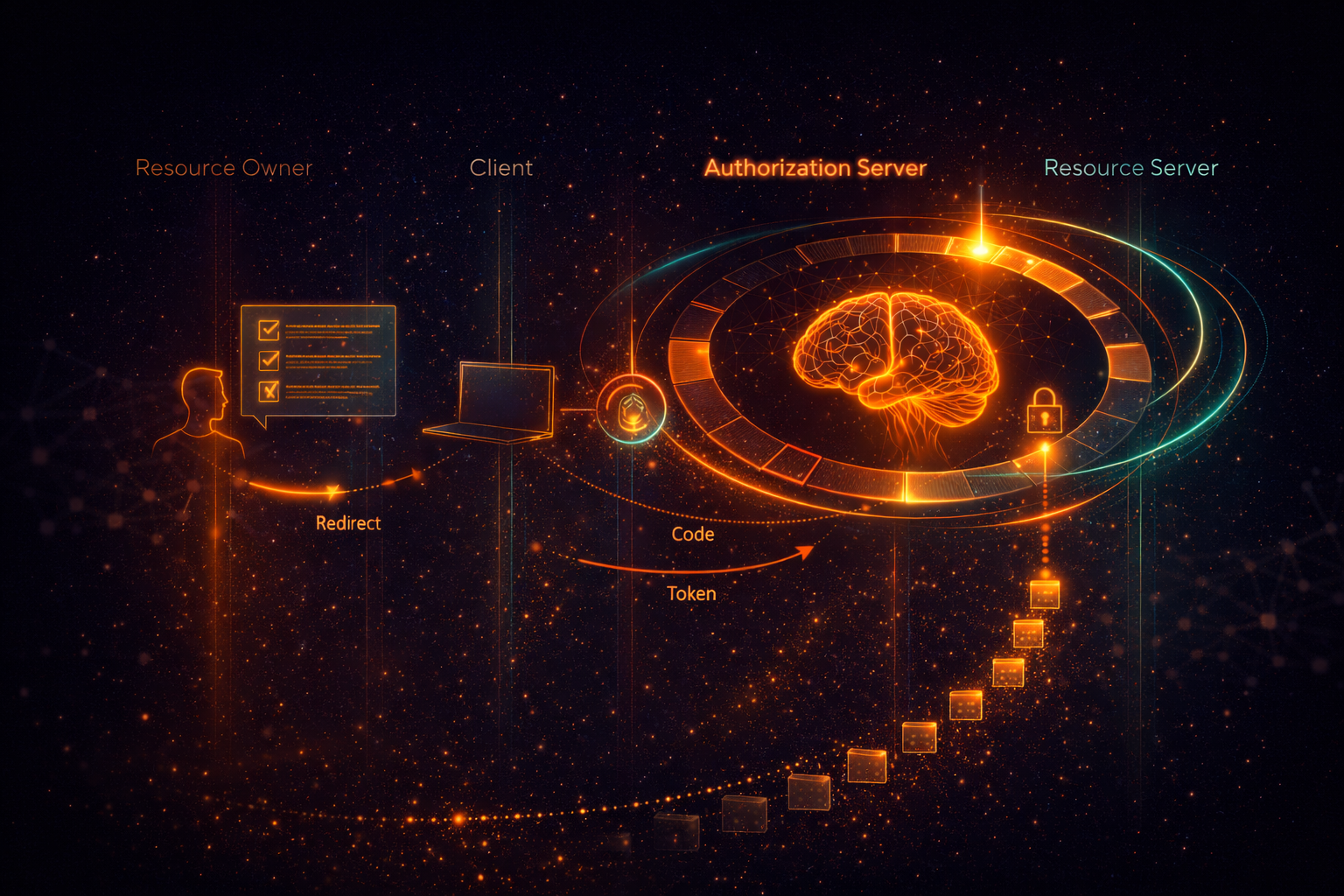
An AI agent that can act without explicit authority is a risk. OAuth3 is a public attempt to define the permission slip it should carry.
Plenty of AI systems know how to call a tool. Far fewer can prove who allowed that tool use, what the boundary was, and how the user can revoke it immediately.
That gap is why agent authorization deserves a real public standard instead of scattered implementation details.
A useful public model is simple: state the scope, the expiration, the approving user, the high-risk actions that require another approval, and the evidence expectation for the run.
That is the mindset behind OAuth3. It is not a marketing term. It is a product discipline for governed action.
If software can read, post, buy, delete, or submit on your behalf, then authority is not a backend footnote. It is part of the user experience.
People deserve to know what their agents are allowed to do, and they deserve a fast stop button when that permission no longer feels safe.