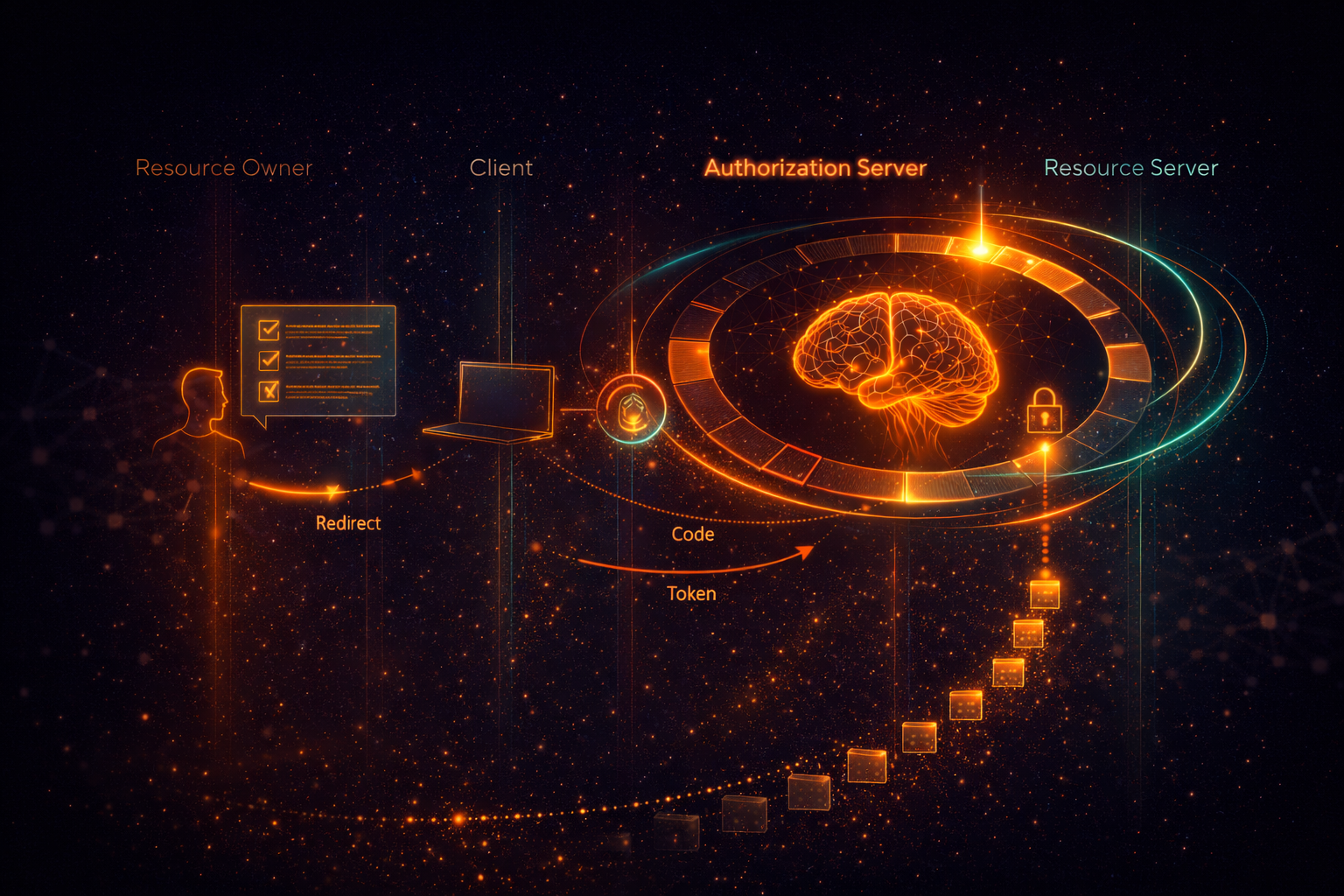
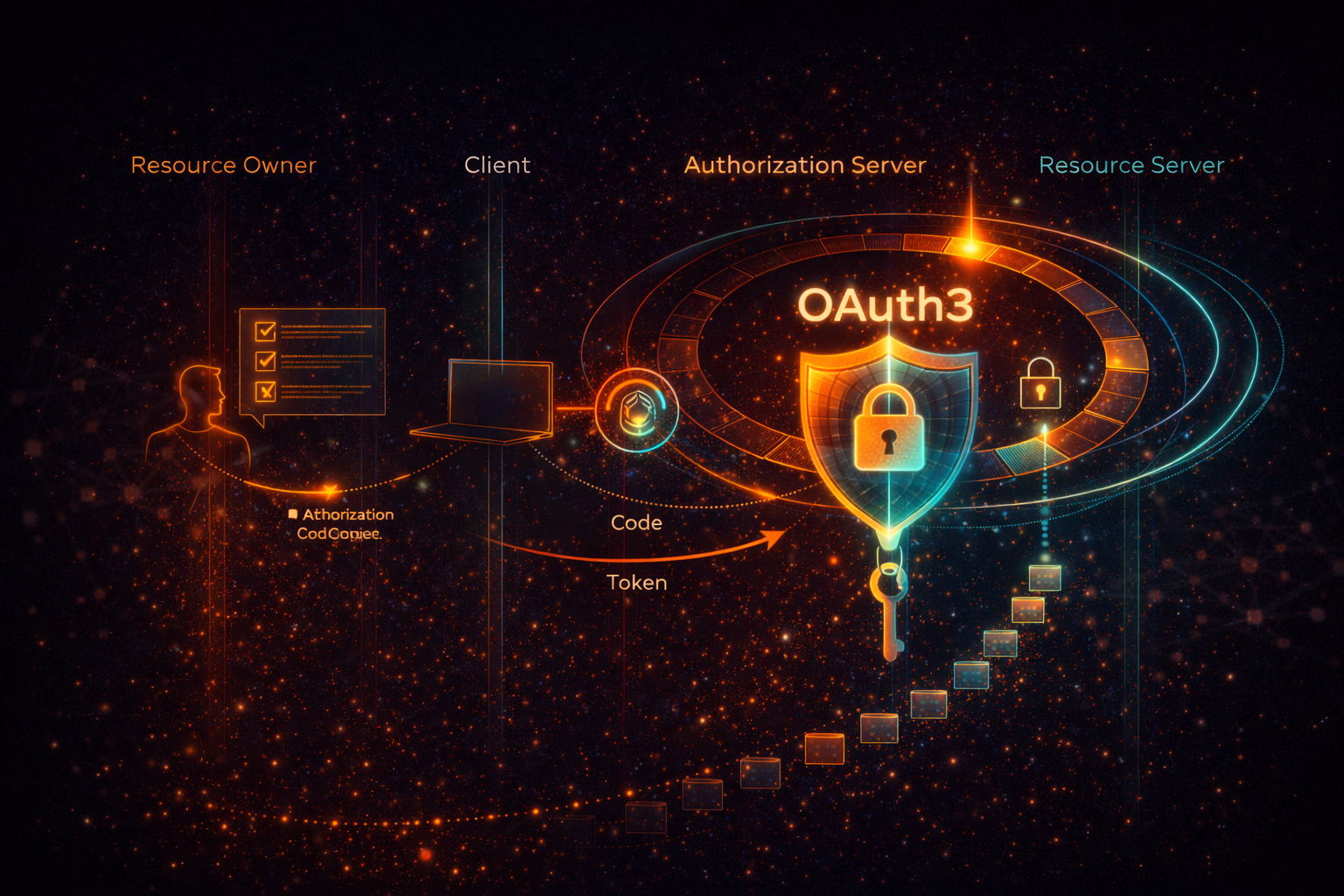
The open standard for AI agent delegation. Grant capabilities, revoke instantly, verify always. OAuth3 puts agency in your hands.
OAuth2 was built for user authentication. “Please log in to see your email.” OAuth3 is built for agent authorization. “Please let this agent triage your email, but only read, never delete.”
OAuth3 is the delegation standard for the AI era. It solves four critical problems:
Not “access all email” but “read emails from boss, never delete any.” Permissions are specific. Agents can’t exceed their mandate.
You see exactly what the agent wants. You approve or deny. No silent permissions. No surprise access.
Stop trusting an agent? Revoke its access instantly. Tokens die immediately. No waiting for password changes.
See every action the agent took, when it took it, and why. Every request signed and timestamped.
Existing problems: Today, you either give an agent FULL access or NO access. ChatGPT can see your entire email inbox. But it might accidentally include secrets in its responses. Your password manager has an API key with full database access. If compromised, everything is exposed.
OAuth3 solution: ChatGPT gets “read only, exclude emails with ‘password’ in subject.” Your password manager’s API key has “read specific field, never write.” Permissions are minimal. Damage is bounded. Trust increases.
An OAuth3 token contains three things: WHO (identity), WHAT (scopes), and WHEN (expiration). It’s cryptographically signed, so you can verify it wasn’t forged.
Notice: the agent can READ inbox and MODIFY labels. But it cannot DELETE emails. It cannot SEND emails. It cannot ACCESS settings. Permissions are explicit and bounded.
OAuth3 is the foundation of trusting agents. See it in action with Solace Browser.